
CoursesFirst Year Seminar: Medieval Worlds
English 0300

First Year Seminar: Medieval Worlds

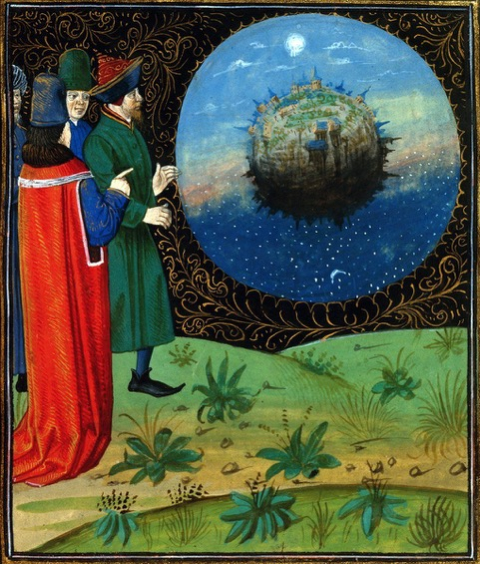
We pride ourselves on thinking globally and having at our fingertips information about people, places, and times. How did people before c.1500 imagine the whole world? What did it mean for them to think big?

Tuesdays and Thursdays, 1:45 PM – 3:15 PM

In this course we read a variety of medieval and early authors who try to take into account the whole world – even though they couldn’t circumnavigate it. We will trace the geographical imaginations and cultural encounters of early writers across different literary genres, from maps, to travel narratives, such as Marco Polo’s account of his travels to China and India and Ibn Battuta’s descriptions of the Arabian Peninsula and West Africa; to monstrous encyclopedias and bestiaries, universal chronicles and chivalric romances. We will also explore different medieval systems of thinking big, such as social hierarchies, genealogies, bibliographies, and natural histories. Assignments will include short weekly responses, an oral presentation, a digital exhibit, and a final research project. Our seminar will take place in Penn’s rare books and manuscripts, where we will learn to handle medieval books, some over 1000 years old.
Related Content

Other Courses of Interest

WRIT 0021/307

Critical Writing: Organizing for Social Justice

Instructor(s)

  • Dilshanie Perera

Semester

Fall 2026

During times that seem politically bleak, you might ask: how is it possible to create lasting social change? What does it mean to organize? What can justice look like in practice? This course examines how change is created incrementally, in the everyday, and in response to structures of oppression, and how it is possible to renew the power of the collective and of the imagination. We will read Kelly Hayes and Mariame Kaba’s Let This Radicalize You: Organizing and the Revolution of Reciprocal Care to examine how organizers enact the hard work of transformative social and political change. Through theoretical, historical, ethnographic, and practical examples, students will gain an understanding of political mobilization and movement building across different contexts. Student research will focus on contemporary movements for justice, articulating their analyses for different audiences through their white paper and op-ed projects.

Learn More
WRIT 0021/302

Critical Writing: Minds in the Wild

Instructor(s)

  • Nora Bradford

Semester

Fall 2026

How smart are you? How smart is your dog? We often measure intelligence by human standards – testing parrots on their ability to name shapes or timing dogs while they solve puzzles. Through this course, we’ll flip the script and put ourselves in animals’ shoes. We’ll mainly read Ed Yong’s recent book examining what various animals actually take in through their senses. Students may focus their research on the sensing, cognition, or communication of a specific species, or on the adoption of new tools, like AI, for improving our understanding of animals. Writing assignments will focus on articulating the recent findings, as well as gaps, within animal intelligence research.

Learn More