
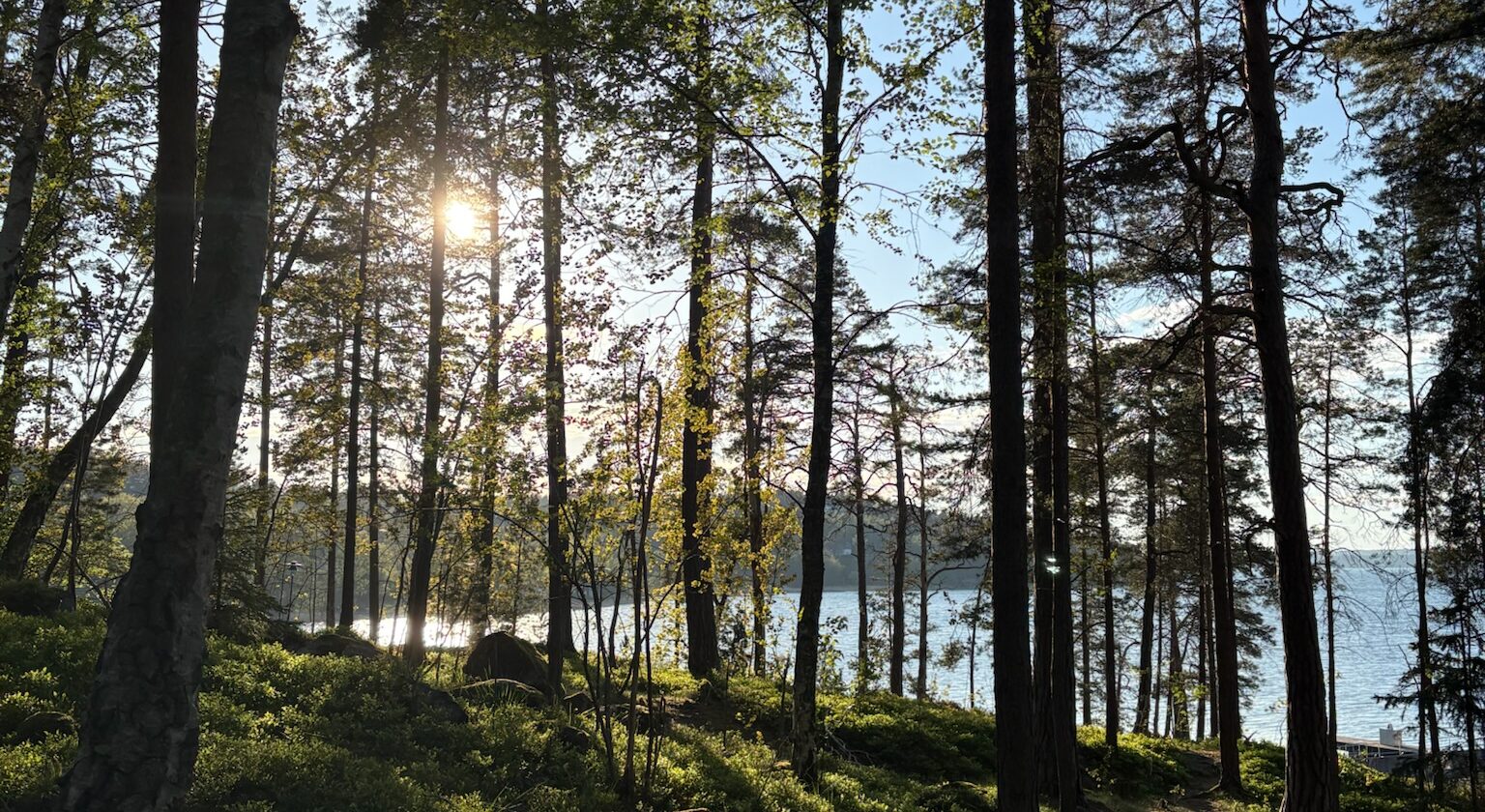
At the end of my junior spring, I had the opportunity to travel to Sweden and conduct research for an independent project with the generous support of the SNF Paideia Dialogue Award. However, upon my travels to Tyreso, a remote coastal municipality bordering the Baltic Sea, my focus shifted. Living within the small town sparked a newfound interest in ecological restoration, climate resilience, and environmental justice. Digging into Sweden’s environmental policies, the statistics were striking: Sweden’s greenhouse gas (GHG) emissions having fallen by 34% since 2000[1]; in 2020, renewable energy accounted for 60% of gross final energy consumption; and 97% of the urban wastewater is treated.[2] My curiosity was piqued enough to want me to explore how Sweden has facilitated this green transition, what policy and economic instruments drove it, and how its sustainability sector continues to evolve.

Most notably, Sweden established the world’s first carbon tax in 1991. Beyond generating substantial revenue, it has provided a direct economic incentive for behavior change, steering households and industry sectors towards more renewable forms of energy like hydropower and nuclear energy.[3] Building on this foundation, in 2017, Sweden adopted a new climate policy framework, anchored by three fundamental pillars: a “Climate Act”, emissions reduction targets (e.g. aiming for net-zero GHG emissions by 2045), and the Climate Policy Council, a body to ensure that the government is aligned with reduction targets and goals outlined.[4] However, it is important to note that Sweden is currently facing a large setback: recent policy shifts have pushed the nation temporarily off-course from the goals set. However, compared to other high GDP-nations like the United States or Canada, Sweden remains a pioneer in greening its economy. What is the underlying difference? A contributing factor could be large economic inequality. Sweden’s Gini coefficient, a measure of wealth inequality from 0 to 1 with higher values denoting wider disparities, sits roughly at 0.29 compared to the United States at 0.41.[5] A wider economic divide correlated with amplified overconsumption can lead to tenuous bonds of social trust. With such income disparities, top-down climate policies are often perceived as penalties rather than shared investments. While economic parity won’t solve the climate crisis overnight, it elicits an underlying essential truth: in order to address environmental concerns, we cannot ignore the underlying and often overlooked social divide that defines our country.

Looking at the policy framework behind Sweden’s climate goals catalyzed me to think about the ramifications of the climate crisis on community health back home in Philadelphia. Through my work volunteering at a free health clinic in the West Philadelphia Parkside community, I’ve seen firsthand how environmental factors directly drive health disparities in marginalized neighborhoods. Parkside is a severe urban heat island, where excessive heat waves exacerbate chronic conditions like cardiac stress and stroke. As I continue to plan the clinic’s annual health fair, my experiences and observations in Sweden have compelled me to think more about sustainability and environmental justice as an additional factor to address health needs for the West Philadelphia community. I’ve established partnerships with Philadelphia 501c(3)s and stakeholders focused on climate resilience for the health fair in an effort to promote sustainable practices and urban development. Through this work, I’ve realized that while top-down, framework-driven policy is crucial, as Sweden demonstrates, it must be met by a thrust of grassroots, community-driven social contribution. On-the-ground action reaches community members in the most authentic, tangible, and impactful ways. This could be a first step to deconstruct the barrier to climate progress: converging bottom-up community leadership with top-down policy to create climate solutions that are truly driven by the people they serve.
While my time in Sweden prompted an incredible opportunity for scholarly exploration, it has also made me reconsider how I want to carve my remaining time at Penn. I have become deeply interested in social impact entrepreneurship, urban leadership, and environmental stewardship— fields that my freshman-year self would have barely recognized, understood, or pursued. What ties these fields together is the practice and ethos of meaningful dialogue, a pivotal SNF Paideia pillar that has shaped my character and personhood. When so much of life remains uncertain, and seemingly befallen, I’ve learned that the most impactful work happens when we foster meaningful connection with one another and engage in dialogue across differences. Whether analyzing policy frameworks or organizing community health outreach in Parkside, SNF Paideia and my time in Sweden has taught me to approach problem-solving through diverse dialogue landscapes and through the core tenets of dialogue: intentionality, humility, curiosity, and community. This is a skill I am confident will serve me well even outside the walls of Penn.
As I move forward with our clinic’s annual health fair, I will keep these tenets at the forefront, pushing for environmental justice through both tangible grassroots work and inclusive dialogue. I am immensely grateful to the SNF Paideia Program for the opportunity to travel abroad, challenge my assumptions and above all, open up illuminating frontiers that facilitate the connection of global policy concepts to meaningful locally driven initiatives.
[1]OECD. (2025, June 30). Environment at a Glance: Sweden.
[2]OECD. (2026, June 16). Development Co‑operation Profiles: Sweden.
[3]Taylor, M. E. (2020). Sweden and nuclear power. In EBSCO.
[4]Swedish Environmental Protection Agency. (2025, September 30). Sweden’s Climate Act and Climate Policy Framework.
[5]World Bank. Gini Index.
Sanya Tinaikar (C’27) is an SNF Paideia Fellow majoring in Economics.