My research explores the dichotomy between two concurrent wartime narratives: that of British rationing, portrayed as patriotic sacrifice, and the catastrophic Bengal famine of 1943, which was largely concealed by the British. This difference in documenting suffering, with one celebrated and one silenced, serves as a powerful lens through which to examine how imperial power structures determined which truths became historical records and which remained buried. Thinking critically about the biases of history, and how to uplift the stories of the histories that go untold, is important to me. I was inspired to “go against the grain” by working with first-hand accounts and unconventional sources in efforts to give attention to historical perspectives lost through time.
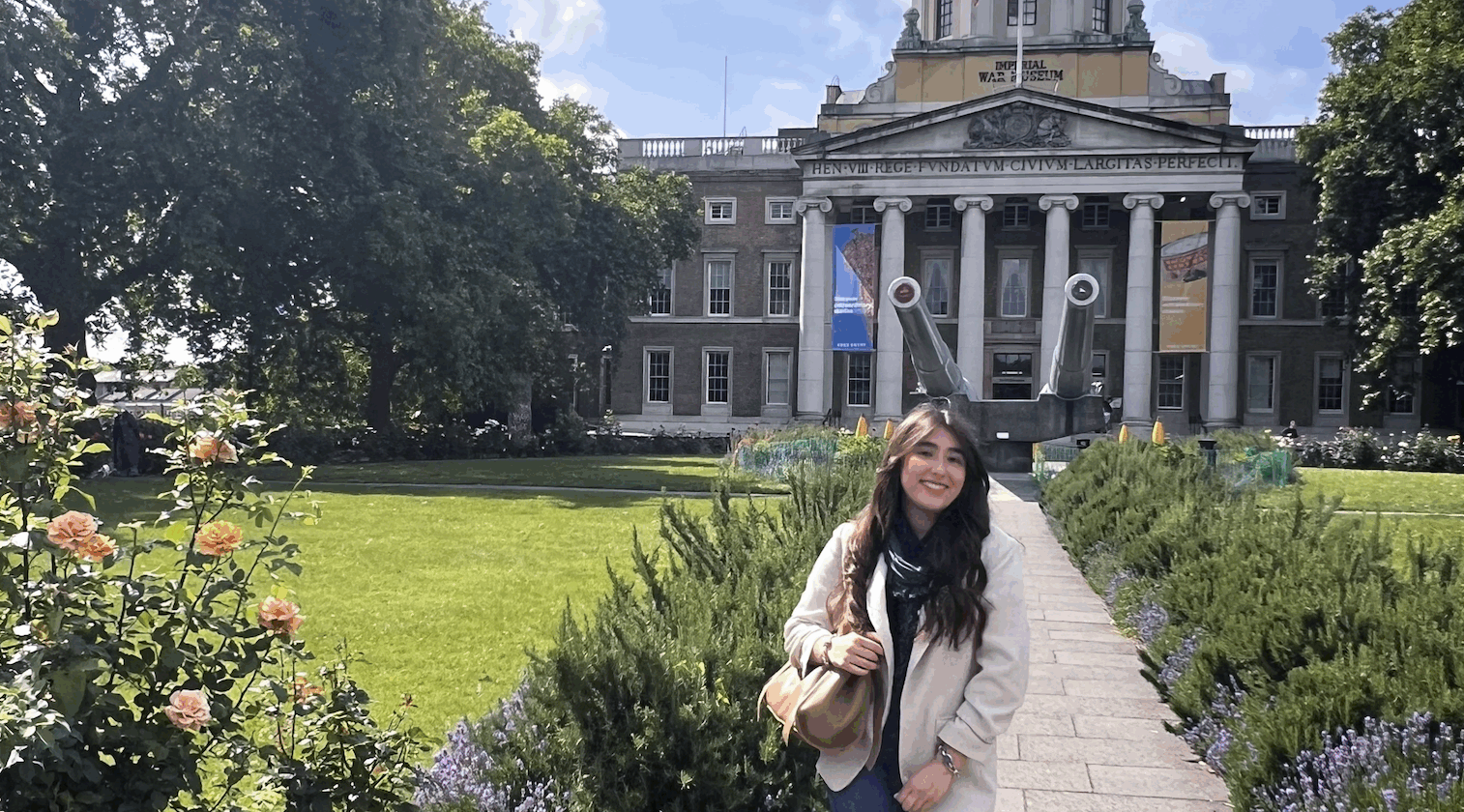
The SNF Paideia Dialogue Fund Award opened this door of discovery, and made it possible for me to fully immerse myself in my research. With this support, I was able to travel to London, where I conducted archival research in both the British Library and the Imperial War Museum. Conducting archival research is like engaging in an active dialogue with the past. My interest in truth seeking was a guiding principle of my research.

To view the past with a greater sense of clarity, I had to go beyond textbooks. The production of history is linked to power– those who hold positions of power are able to dictate how history is recorded, controlling both what is said and what is left unsaid. As I traveled through time, perched in a chair in the silence of the dimly lit reading rooms of the British Library with newspaper clippings, telegrams, and Ministry of Food records spread before me, a different story emerged. I began to collect diverse perspectives that revealed truth beneath multifaceted layers of history. I could not help but wonder whose hands had also held these documents, and whose eyes had seen their pages. Engaging with the past was not confined to the walls of the library reading rooms or in the museum archives; as I wandered through London’s cobbled stone streets and historic sites, it felt like I was stepping into the pages of my history books and favorite novels.
Present throughout my research has been one thing: history is not stagnant, but is constantly evolving. Moments in history are reshaped and better understood as we look for answers in alternative sources. I feel an immense sense of gratitude to have had this opportunity and the encouragement from my professors to think critically about history, to ask questions, and to seek answers.
Rafaella Lambrinos (C’26) is majoring in History with a concentration in European History.